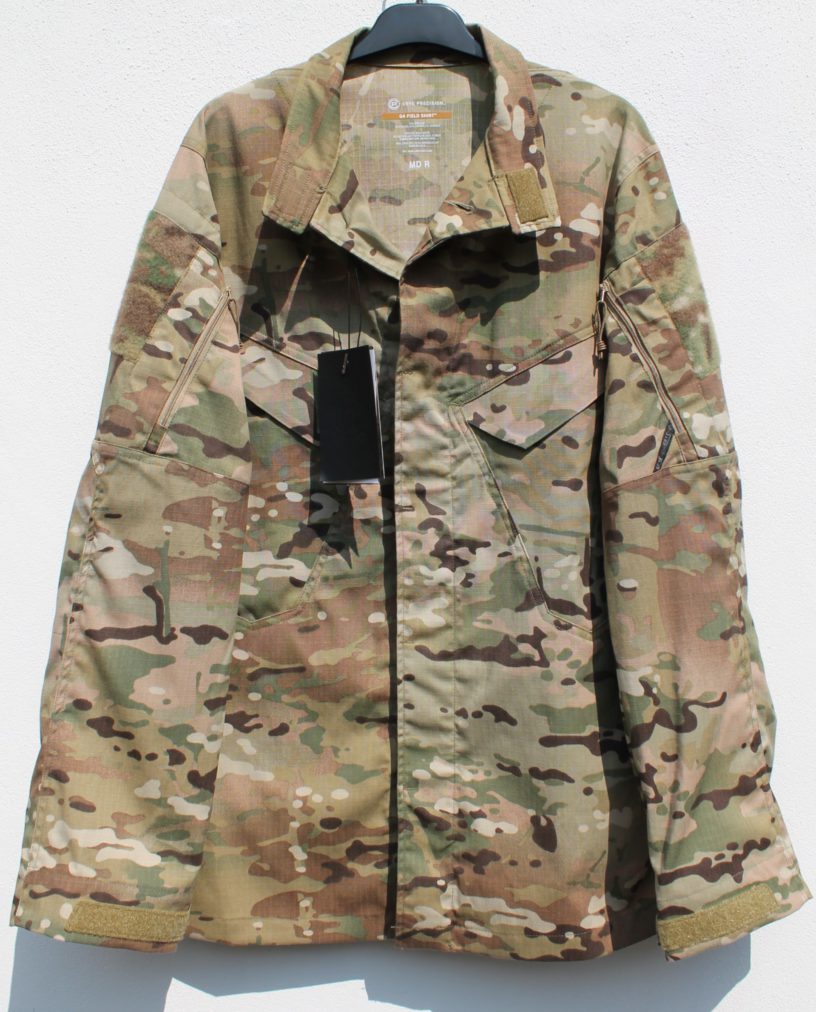
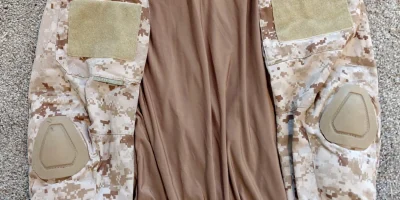

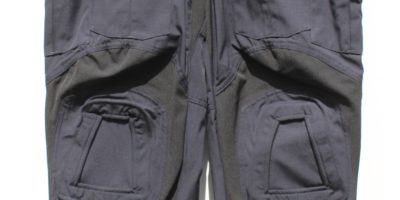
Before I get in to the field shirt; if you would like some further general discussion of the shirts in the G4 line-up, please do reference my earlier post on the combat cut below.
This particular garment is a totally standard US-produced example in original Multicam, utilising the same 2-way stretch VTX NY/CO blend fabric as all other typical G4 products.
Is the improvement in cut and fabric worth the price for the individual who is buying equipment with their own money, when compared to a surplus ACU or PCS shirt in essentially the same camo pattern? As much as I enjoy my Cryes as a collector and writer, I would be clearly lying if I said anything other than no. Doubly so if you do put heavy wear on your equipment and will end up needing to replace it frequently.
If you get issued this kit however, then great. It is excellent.
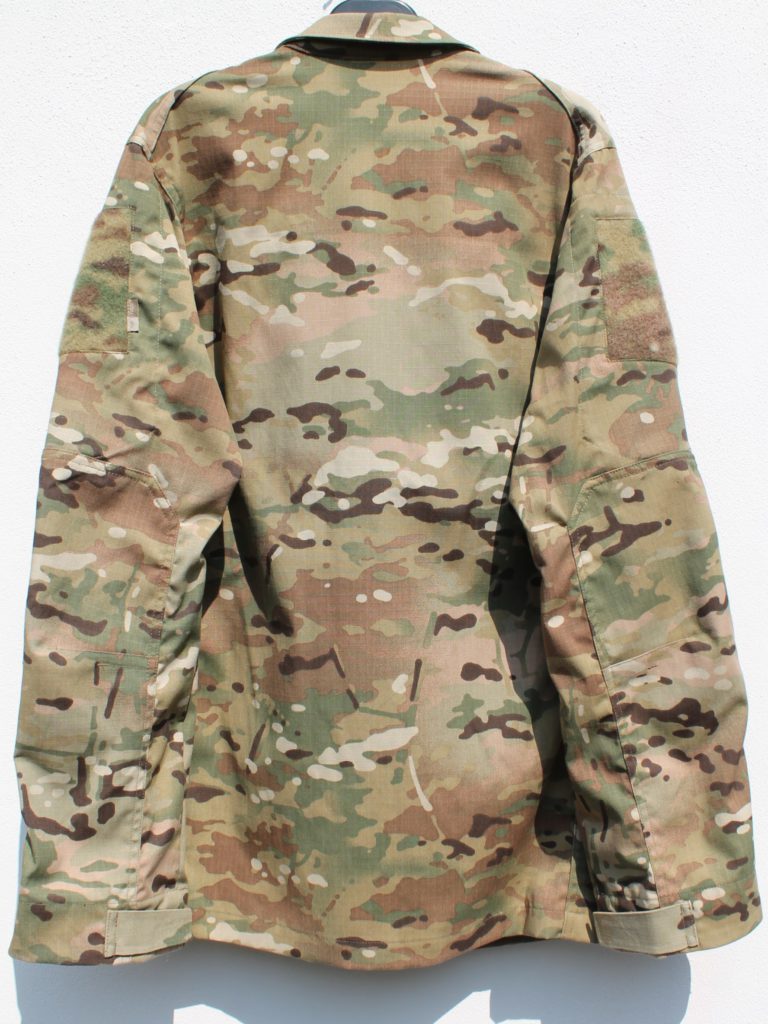
You can tell a fair bit about the actual fit of a garment by how it hangs. A lot of more economically priced shirts are just a tube of material for the body and then 2 more straight tubes of fabric for the sleeves. When on a hanger, they present themselves as such, especially if the fabric is a bit on the stiff side.
As already mentioned, you will get massively greater value from the 3 x tubes shirt, but the Crye has just that noticeable extra bit of comfort to it overall. The combination of the stretch fabric and more complex cut that actually fits a human, makes for a better wear experience whether you’re in barracks or doing the sorts of things that high end uniforms are made for.
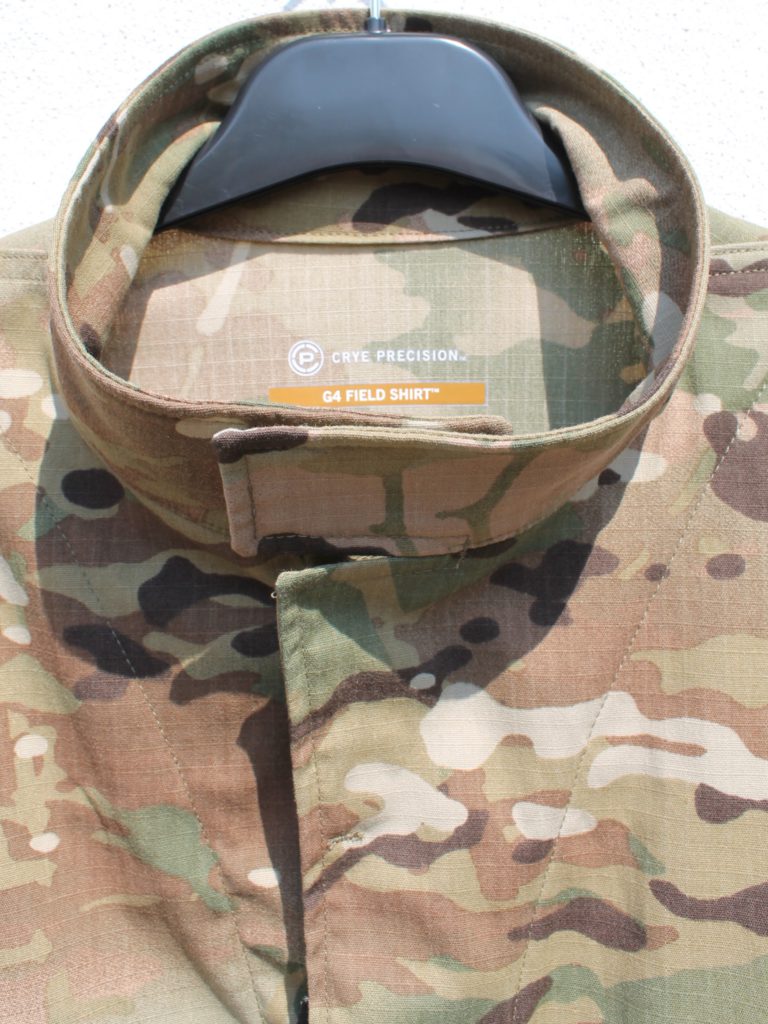
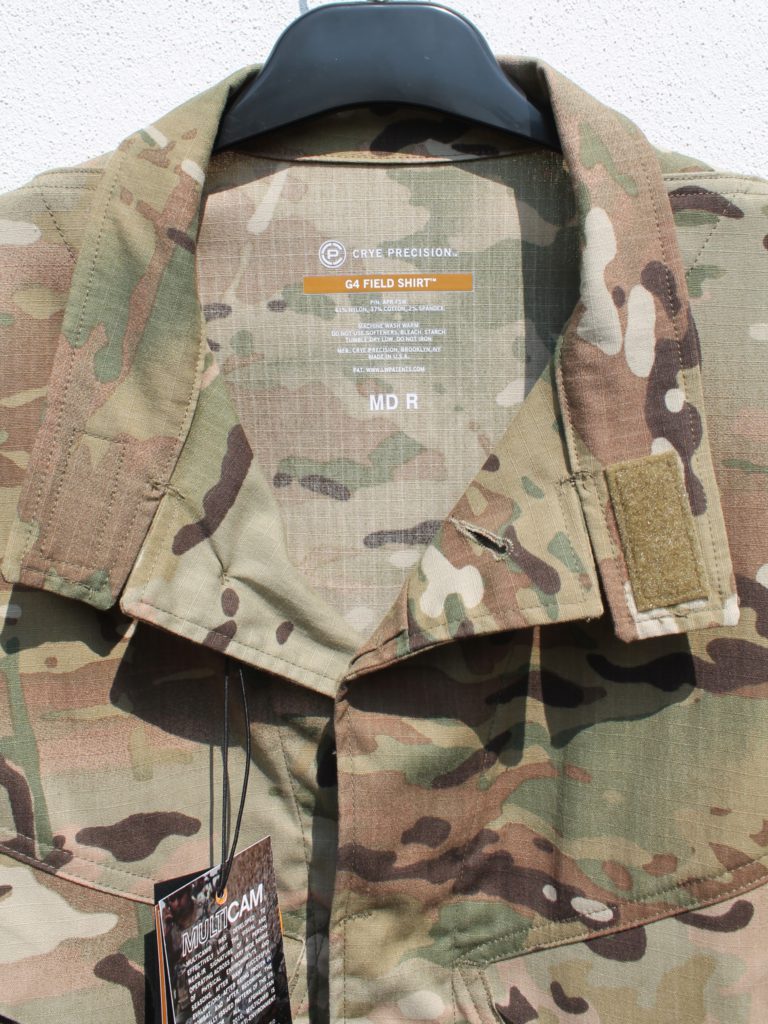
Design of the collar allows for either a stand-up wear to protect the neck or a classic barracks V neck. Nothing much different from every good, modern uniform shirt here. But, if it isn’t broken best not to fix it. Neither too tall nor too short, nothing to complain about in this area. I’m not convinced that anyone can innovate on a shirt collar in 2026.
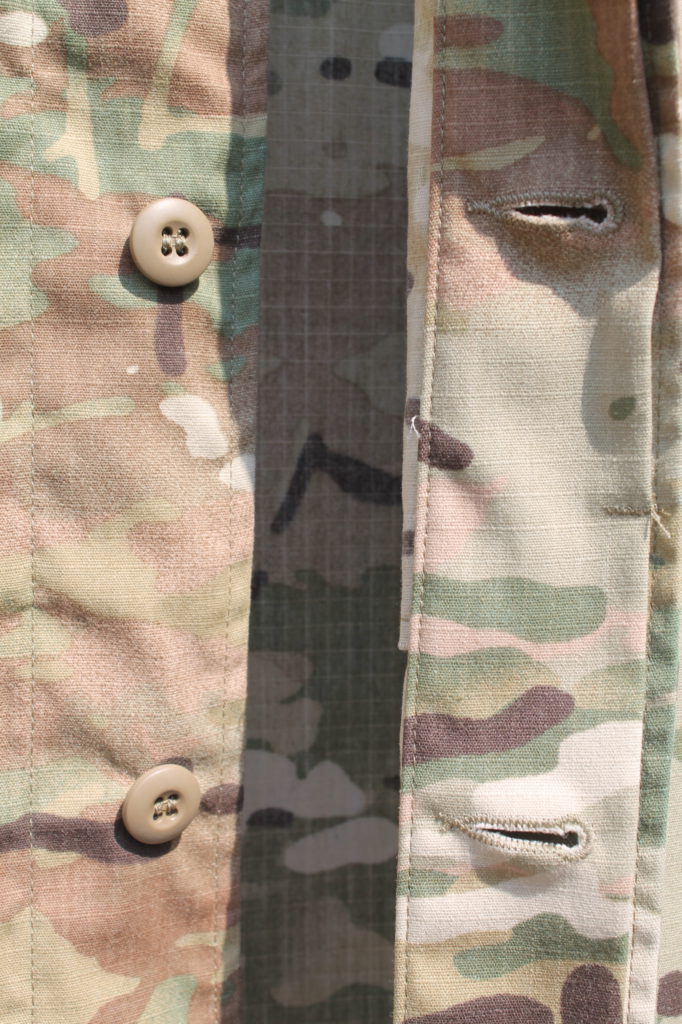
Front closure is purely via those 4-hole buttons, no zip or velcro. I can’t help but feel that this aspect is at least partially driven by US military institutional inertia, as in ‘this is just how we’ve always done it’.
When it comes to new weapons being designed with AR-like controls and ergonomics, that mindset makes sense, as basically everyone agrees that those controls are ideal. 4-hole buttons however rely on a comparatively small amount of poorly supported and narrow thread to be held in place, yet can bear the brunt of a lot of wear and tear in use. Their attachment simply isn’t anywhere near as durable as a taped/canadian style button. Ok for a barracks garment but somewhat sub-par given the price of Crye apparel. I have been told by an employee of the company that this design decision is one often taken to keep price down, though I am unsure how much extra it would cost to implement a better solution. At the time of writing the price for this shirt is $291, and I’d rather pay another 10-20 at that point for better primary closure. Though of course gov contracts are the main concern for companies like Crye, at which point every extra dollar does matter.
On the plus side there is at least an outer flap of VTX to cover the buttons when worn. However, if you examine a UK issue G4 field shirt in MTP you will find taped buttons in place of these, which is a nice improvement. Though it has to be said that buttons are never the perfect option if worn under any sort of load carriage kit.
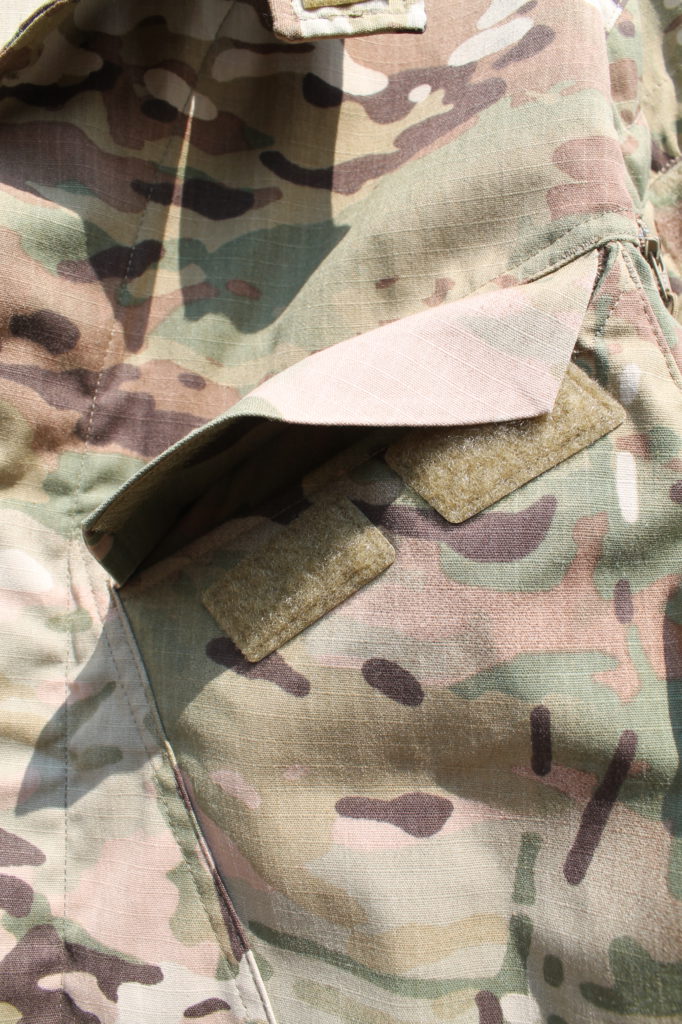
Flaps on the chest pockets employ a fabric welding technique which keeps them very thin and low profile compared to the usual sewing technique. This does help marginally with fabric bulk in areas like pockets where there are already multiple layers of material layered on top of each other, though all things considered it’s a marginal gain in use for most wearers. I like the technology update however.
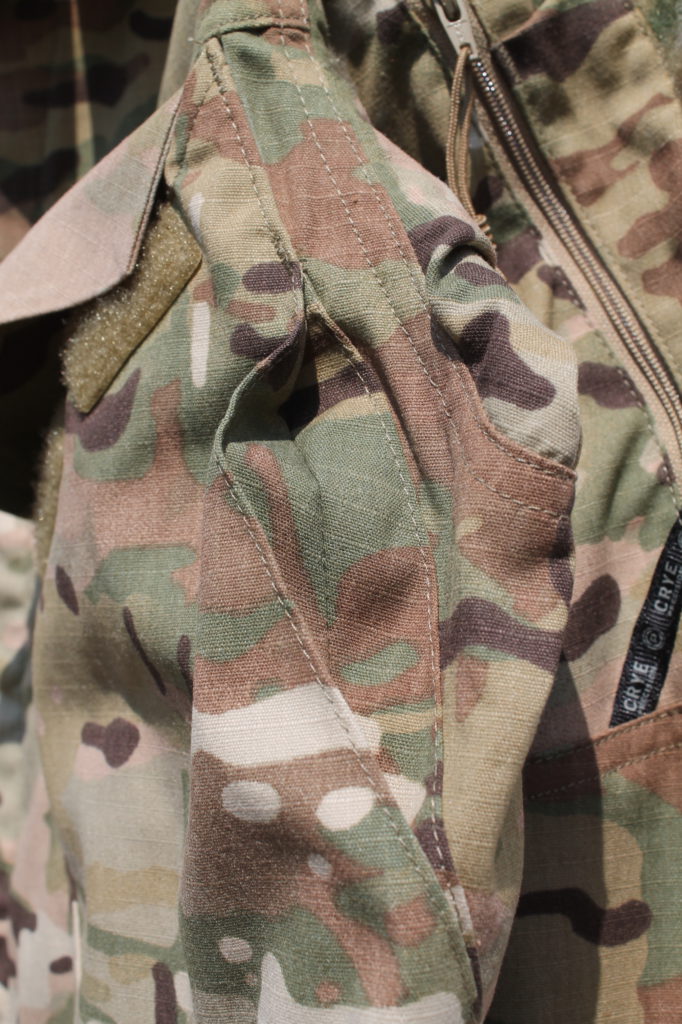
Chest pockets are pleated on their outboard edges, allowing them to sit flat when empty but expand to a reasonable size when desired. The size of the potential expansion is fairly conservative compared to some older issued uniform designs out there, but is reasonable and practical for the volume of equipment that anyone should actually be carrying in a chest pocket.
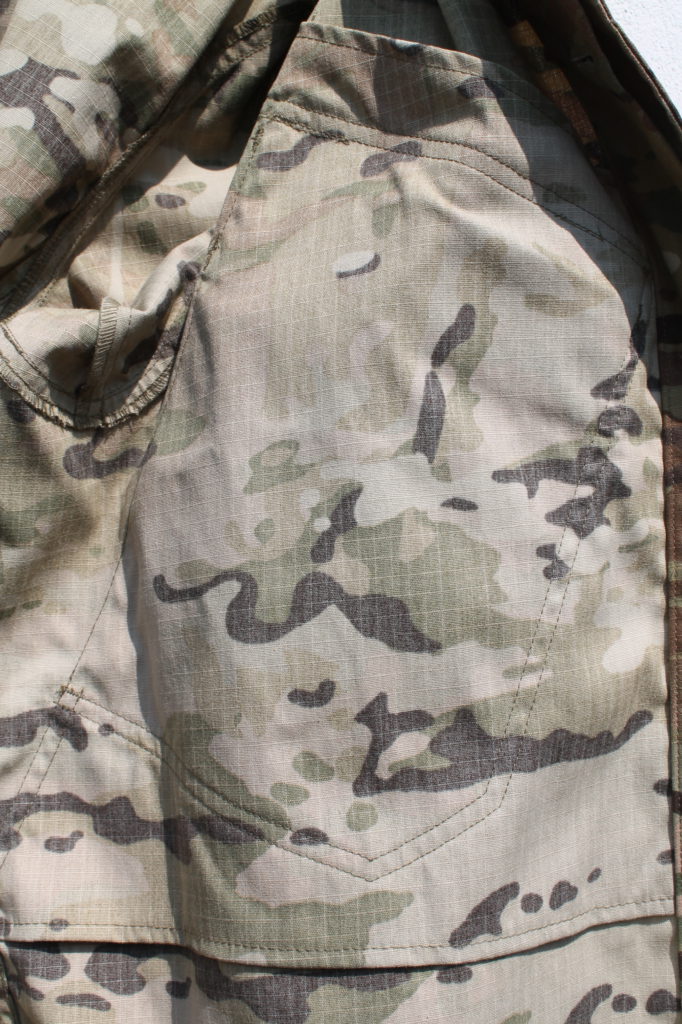
Above is the internal view of the left side chest pocket (when worn). Just be careful of dumping any really tiny items in there, because they will get stuck right in to that sharp angle at the very bottom of the pocket and will be a mission to fish out. Particularly since the pocket opening is the aforementioned top flap and the overall shape is tall and narrow.
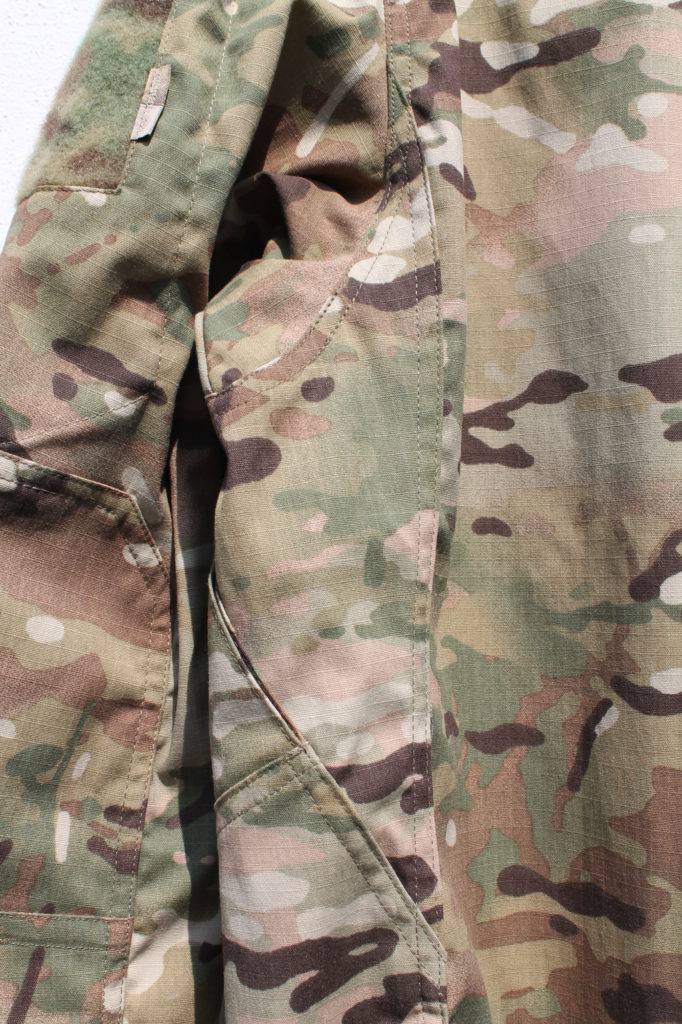
There is plenty of articulation built in around the lat area, with this extra panel just behind and under each arm, behind the chest pockets. There are few things as quite annoying as an ill fitting shirt that doesn’t allow you the freedom to really reach upwards or forwards.
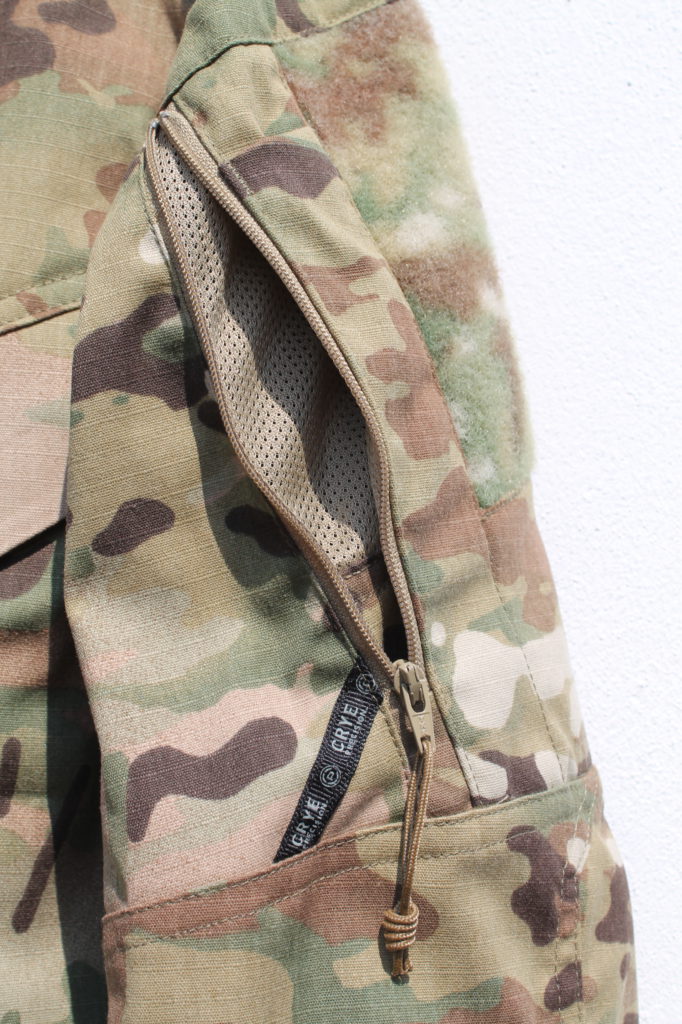
Pretty typical small gauge YKK coil zip for the bicep pockets. The pull tab is small and light enough to not make any significant noise with the included loop of cord fitted. As on the combat shirt, the fabric that makes up the internal element of the pockets is a mesh, meaning the pocket openings can double up as vents – assuming you don’t actually put anything in to the pockets of course.
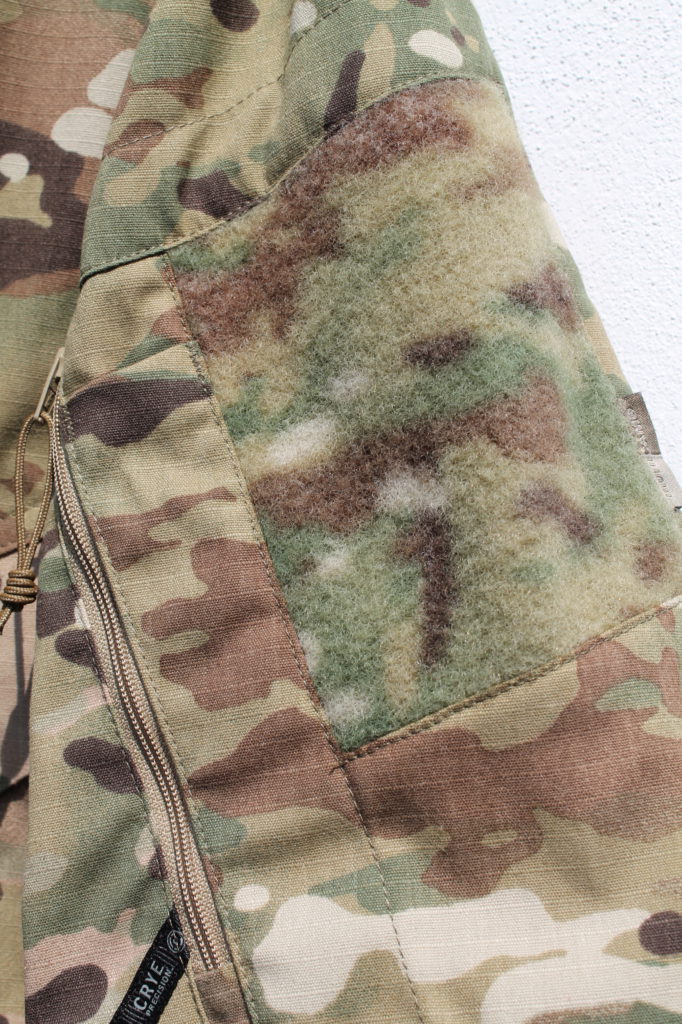
Inclusion of a pen slot is always a debateable idea for me. In the engineering world that I am in myself, yes a quick access slot is great, and yes essentially all career fields need pens on a regular basis for some reason or another. However the implication with all Crye uniforms is that they are built for the harshest combat conditions, under which, 99% of the pens out there will have a good chance of being quickly broken if left exposed like this on the upper arm. At least the slot is integrated and less of a snag hazard vs the G3 design.
Having the loop field also sewn integrally to the pocket is also an interesting idea. I don’t think the exposed edges of the loop were a common cause of problems for most G3 wearers, but equally I don’t have access to whatever database of end user feedback Crye maintains. Technically, this does cut down on the tiniest bit of weight and remove a layer of fabric, but again we are talking a marginal gain here.
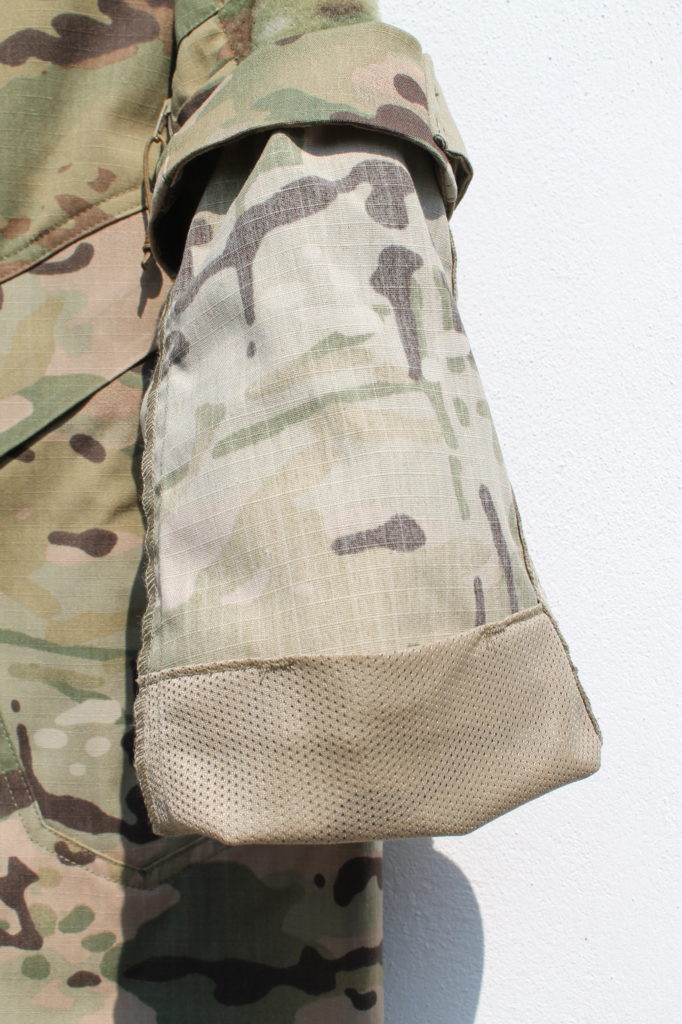
As per the combat shirt and field pants, the elbow pads here are retained in place only by the cup-shaped upper section of each pad, which is inserted in to this internal mesh stowage/pocket arrangement. Definitely an unusual configuration when compared to most other shirts that integrate an elbow pad pocket.
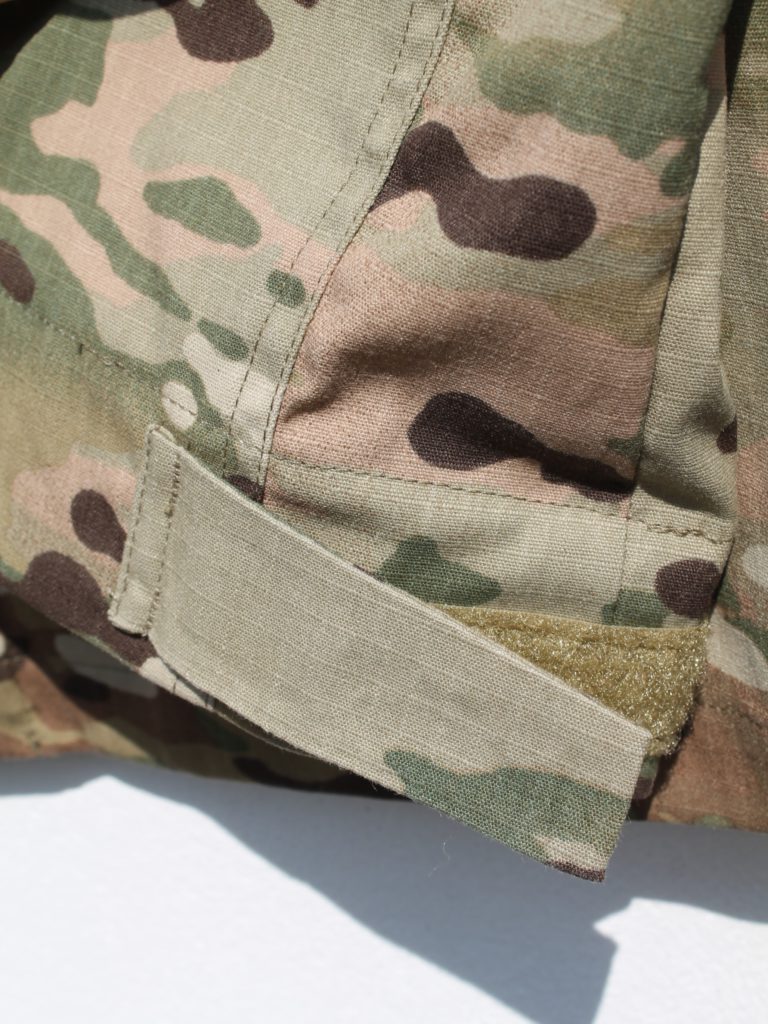
Cuff adjustment tabs use velcro and the same welded fabric construction seen elsewhere on the shirt (note the lack of stitching on the body of the tab), making for a very clean assembly. Plenty of range of adjustment to suit all body shapes and sizes.
Hopefully, all of the above will be informative and aid you in making any potential expensive uniform purchasing decisions. Or, at least educational in terms of the sort of features to be found on a very top end camouflage garment intended for military usage, along with the various small gains that companies eke out when designing the best possible garments and intending to sell at a very high price point.

Leave a Reply