
To immediately address the abbreviations:
Integrated Tourniquet System – High Performance Fighting Uniform
The BLACKHAWK! (that is how they always write it) HPFU set included a field shirt, combat shirt, trousers and a vest that was somewhat akin to the range vest Crye made during their Gen 1 production. You can see an original release announcement from 2008 here:
https://soldiersystems.net/2008/11/04/blackhawk-high-performance-fighting-uniform/
There were versions without the integrated tourniquets and they are a mildly cool and interesting footnote in the history of 2000s tactical equipment. But, they only enjoyed a fairly brief time in the limelight and are not significantly different to any other commercial, cotton-blend duty apparel. On the other hand, the ITS versions were quite a pretty unique product line at the time and remain so to this day.
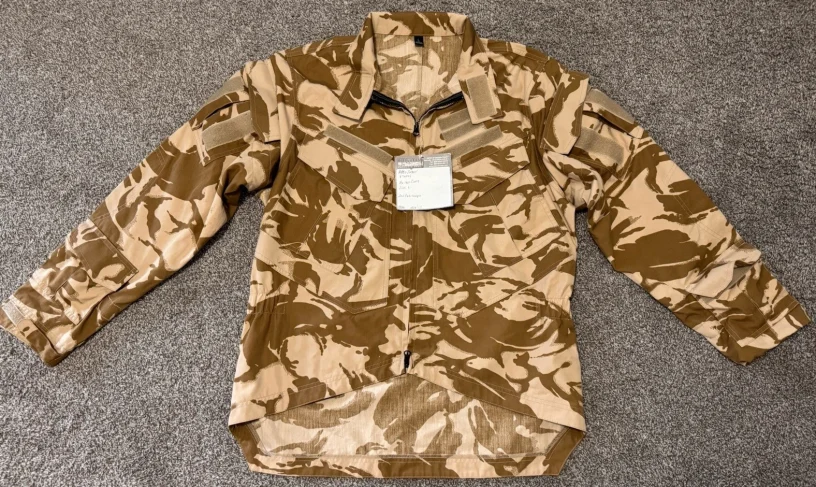
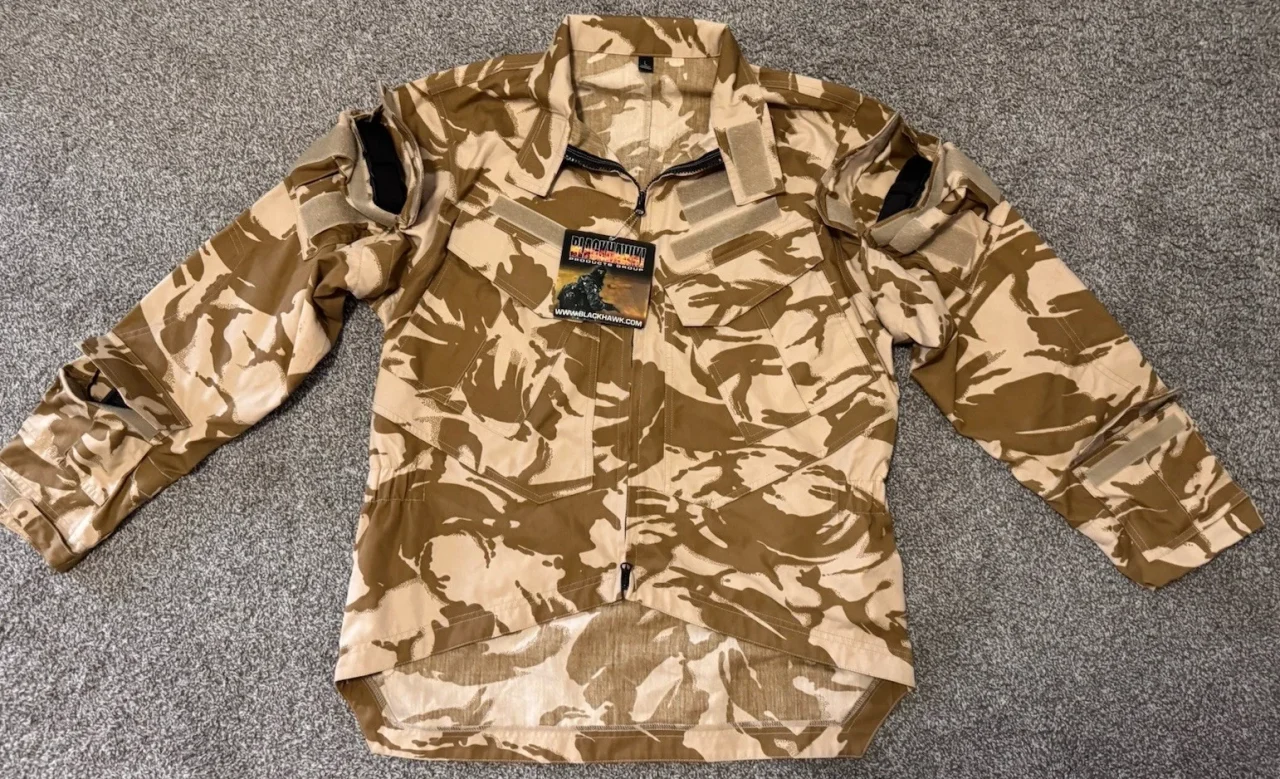
This particular piece came up for sale on the used market and I have never seen another quite like it. Unfortunately my physical space for storing more kit these days is extremely limited, so I had to just use the photos from the listing, but in this instance I think they do the job.
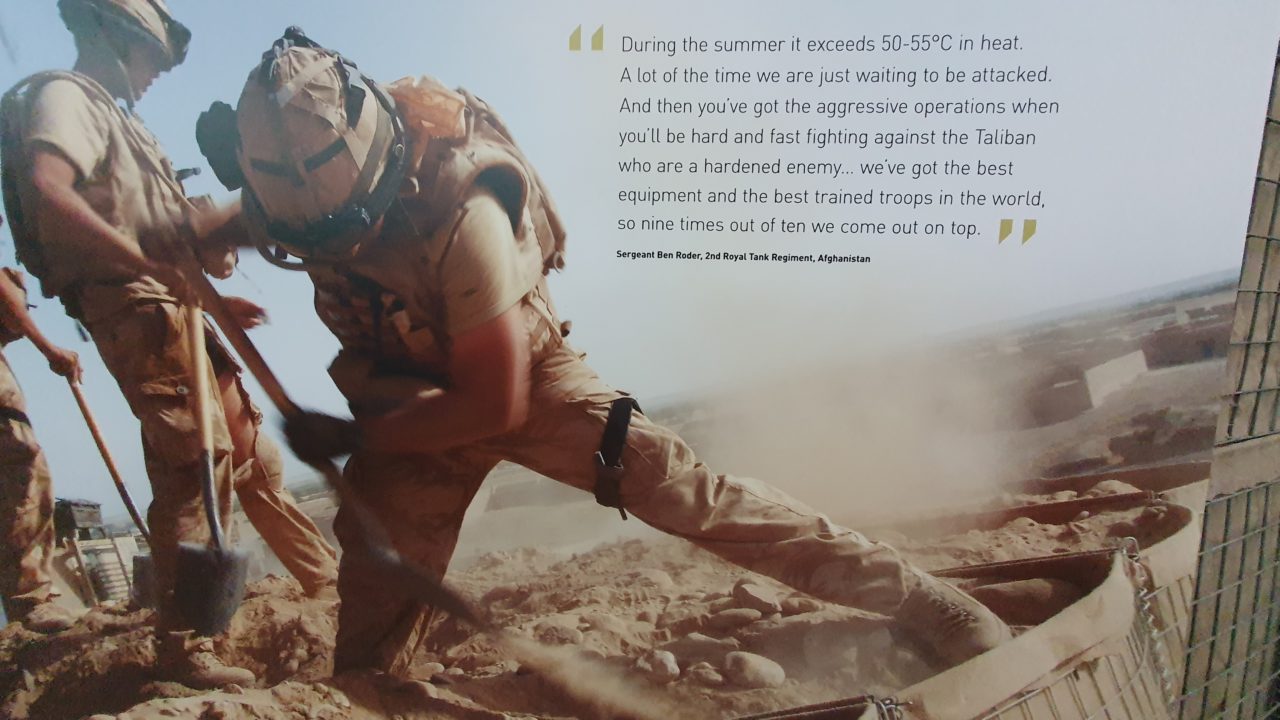
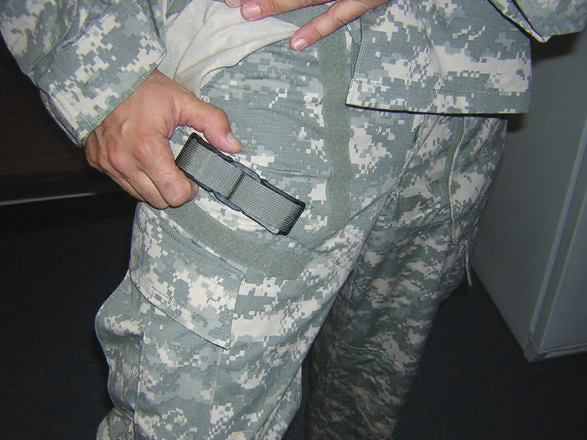
I originally took the above picture myself at the Bovington Tank Museum during a visit in 2024. Ordinarily the subjects would not necessarily stand out, they are largely wearing quite typical equipment for early-mid Op HERRICK/TELIC (GWOT). If you note the left leg of the man in the foreground however, you will see an issued Combat Application Tourniquet (CAT) prepped and ready to go, looped around his thigh and held in place by the pocket flap button of his CS95 DDPM trousers.
Given that the gentlemen in the photo are wearing Osprey vests, the picture was probably taken in the late 2000s, which lines up nicely with our BLACKHAWK! shirt here.
I can’t say exactly how common it was for deployed personnel to have their issued TQs worn in this fashion, as opposed to being secured away in a pouch or pocket in the more conventional manner. However I do remember hearing some discussion around it at that time (16-18 years ago), so I’d be confident in saying that this image isn’t just a unique or one-off event. It wasn’t quite a universal practice, but it was done with some frequency.
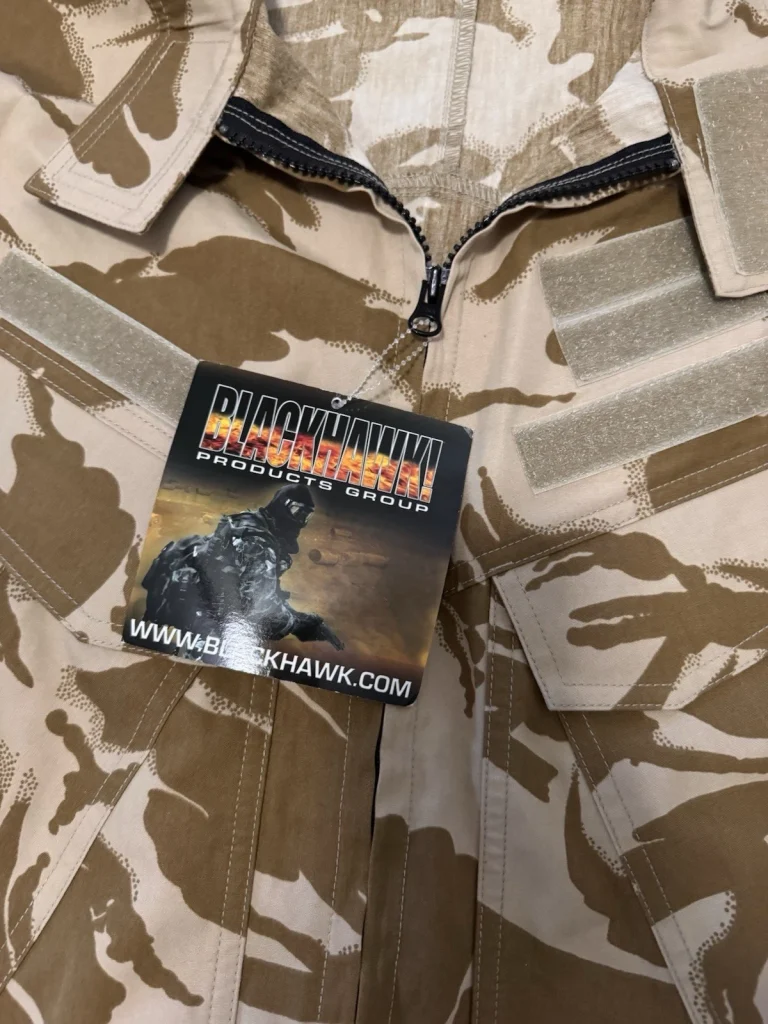
On a basic level, the actual design of this shirt is nothing remarkable and frankly a few of the decisions here are not good ones. No doubt they were trying to compete with the meteoric rise of Crye’s uniforms, first Gen 1 and then the Gen 2s that would have been fairly common and certainly popular/sought after at the time this was made.
There are 2 pockets on each sleeve, which in this case each provide access to the integrated tourniquets. Then we have a further 2 pockets on each side of the chest, with a similar layout to Crye G2 and 3 field shirts i.e. a standard top flap external pocket mounted on top of a side access internal pocket, with the openings for those being near the arm pits.
Supposedly the ‘tuxedo cut’ with the short front hem and lower back was designed so the back would stay tucked and the wearer could access belt kit on their front. Basically no other design, whether popular or otherwise, makes use of this though and for good reason. The best way to keep the front/sides of a shirt out of the way of pouches on a belt is to have it firmly tucked in all the way around, so I don’t rate this design.
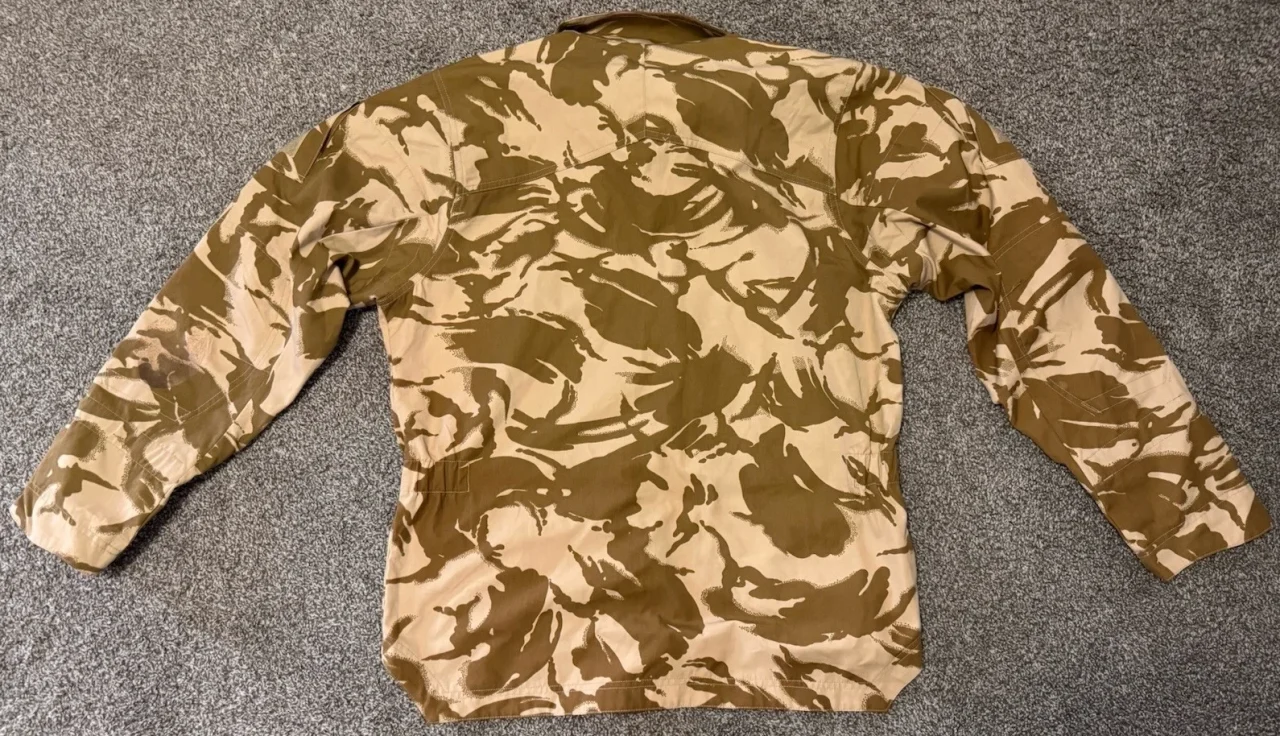
Originally these had extra abrasion resistant panels on the elbows, but this example seems to have lost them over time (the ghost of the glue is quite visible on the left elbow there). Nothing else significant to note on the back here.
Fortunately the above video has survived from 15 years ago, so have a watch if you’d like to see a company representative going over the entire line of HPFU items and giving a brief demo of the integrated TQs.
When you take in to account the fact that the Crye Gen 3 line was released the same year as this video however, you can quite easily see why this clothing line was eclipsed and died off.
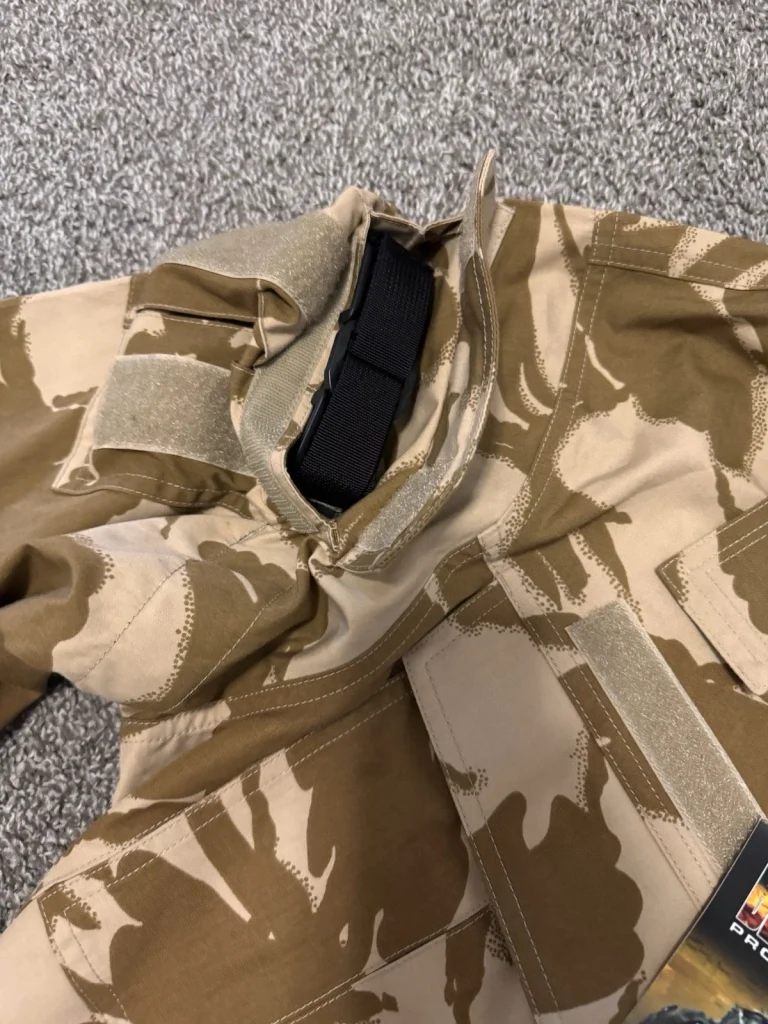
In the original version of the uniform as shown here (there was a V2), torniquets were built in to both the upper arm pockets and also down on the forearms in another pair of pockets closer to the wrists. Whether the TQs were actually any good at cutting off arterial flow, I do not know, but I would have my reservations just from looking at them. They were only 1″ wide, which makes for a pretty poor total surface area compared to a CAT. I might even venture to say that maybe they were serviceable in terms of cutting off circulation, but being so narrow they might have been rather more prone to causing secondary injuries simply through the pressure exerted during their application.
To go back to the built-in redundancy of having 2 on each arm however, I’d say that that is an indicator of why this entire concept wasn’t actually very good, and I have my suspicions as to why it did not stand the test of time. The V2 deleted the lower set of TQs, but that clearly didn’t succeed in creating a design that was popular and widely adopted/purchased. There was never a V3.
First off, just having a normal TQ in a med kit that can be positioned wherever it is needed, instantly deletes many major issues with this uniform design. Even assuming that everyone who might come across the casualty was familiar with this specific uniform’s functionality (dubious), the integrated and immovable TQs only save a tiny amount of time. While the importance of time should certainly not be dismissed in the event of an arterial bleed, these affixed TQs will often hinder or even negate the ability of the blood-flow constriction to be applied in the exact and precise location it is needed.
And again, for this uniform to fulfil it’s function, then anyone who came across the casualty would have to know that there were hidden TQs built in to their pockets. If we were to be generous then we might say that the most likely person to first attend any casualty would probably be one of said casualty’s team mates and that is true a lot of the time. But a pretty universal SOP is to use a casualty’s own medical kit on them before using your own kit, so if a person doesn’t have any traditional TQs in an IFAK due to wearing this uniform, then the first responder is going to waste a lot of time searching for equipment that isn’t there.
Another major issue is placement. Now if, for example, you wanted to apply pressure and close an artery either just above or just below the elbow, then neither of the sleeve TQs in this shirt is ideally positioned for you to do that. If the injury is anywhere lower than the upper TQ in the bicep pocket, then there’s a high chance that the lower TQ built in near the wrist won’t even be available to be shimmied up the arm, as it will quite possibly have been lost/destroyed in the explosion that caused the injury to begin with.
Moral of the story is to just keep a few TQs of a well-trusted and commonly issued design (like the CAT) in specific places on your person/equipment. As has been the established norm for a long time now. Though admittedly if we go back 15-20 years, there was a lot more debate going on around the topic.
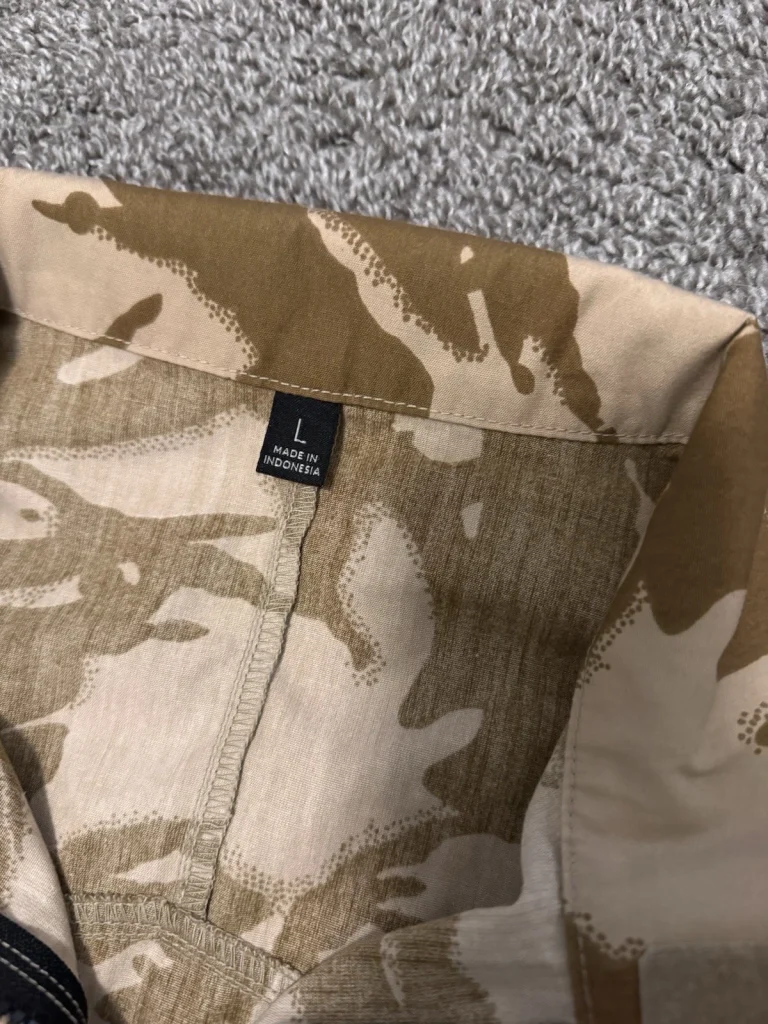
Even back in the 2000s, Blackhawk already had plenty of experience exporting production to Asia. They were probably one of the earliest companies to go down the route of building a reputation with US manufacture and then quietly pulling the rug from under their clients and switching to production in the east. Eagle did pretty much the same thing around a similar time period.
As for the camouflage on this shirt, it isn’t a standard offering from any iteration of the HPFU line-up. With such items, there are usually 2 possible explanations:
- Special unit small quantity purchase because they really wanted some and actually had the budget.
- Very small batch production for demonstration to a government department in an attempt to win a purchasing contract.
Short of some solid concrete evidence for one or the other, it’s usually a case of taking an educated guess as to which is the reality. I could certainly imagine BLACKHAWK! trying to win an MoD contract to supply these en masse and then producing just one or two examples for demonstration purposes. DDPM fabric was definitely being churned out at a quick pace around the time period we’ve been discussing here.
I’m always on the look out for transatlantic co-operation type kits and items of equipment, so stumbling upon this and writing this article has definitely ticked the right boxes in terms of interest.

Leave a Reply